





If you’ve ever shopped for blinds (or even just measured a window and immediately regretted it), you’ve probably run into two terms that sound simple but carry a lot of real-world consequences: inside-mount and outside-mount. They’re not just “two ways to hang blinds.” They affect light control, privacy, insulation, how big your windows look, and whether your finished result looks sleek and built-in or bold and statement-making.
And if you’re decorating a home where sun, humidity, and everyday living all collide—think coastal vibes, bright afternoons, and rooms that need to feel calm and functional—choosing the right mount matters even more. This is especially true for anyone searching for Charleston SC window treatments, where the right style isn’t just about looks; it’s about comfort, durability, and controlling that beautiful-but-intense natural light.
Let’s break down what inside-mount and outside-mount blinds really mean, how to tell which one is right for your windows, and the little details that make a big difference once the blinds are up and you’re living with them every day.
Inside-mount blinds: the clean, built-in look
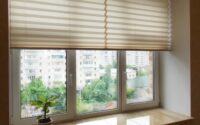
An inside mount means the blind sits inside the window frame (or inside the “recess” of the window). The headrail is installed at the top of the opening, and the blind drops down within the frame. When it’s done well, it looks tailored—like the blind was meant to be part of the window, not something added later.
This is the style many people picture when they imagine a neat, modern window treatment. It keeps the treatment visually contained, which can be a big win if you have beautiful trim you want to show off, or if you’re trying to keep a room from feeling busy.
Why inside-mount is so popular
Inside-mount blinds tend to look crisp and intentional. Because the blind is tucked into the window opening, it doesn’t interrupt the wall space around the window. That can make a room feel more open—especially in smaller spaces like bathrooms, breakfast nooks, or narrow hallways with a window at the end.
Another big advantage is how well inside mounts pair with other layers. If you plan to add drapery panels later (or already have them), an inside mount keeps the blind out of the way so your fabric can hang cleanly. It’s a classic “best of both worlds” setup: structured light control plus soft texture.
Inside mounts also work well for windows that are close together. When you have multiple windows in a row, mounting everything inside each frame can create a consistent rhythm and keep the overall wall line tidy.
What you need for an inside mount to work
The biggest requirement is depth. Your window frame needs enough depth to fit the blind headrail and still allow the blind to sit flush (or close to flush) with the wall. Some products can be partially recessed, but if you want that fully built-in look, you’ll need more depth than many people expect.
Square corners also matter. Many window frames aren’t perfectly square—especially in older homes. Even small variations can cause a blind to rub, tilt slightly, or leave uneven gaps. A good measurement process accounts for this, but it’s one reason inside mounts can be less forgiving than outside mounts.
Hardware and obstacles are another consideration. Window cranks, locks, alarm sensors, and even thick trim can interfere with how the blind sits and operates. If something protrudes into the frame space, you may need a spacer, a different product, or an outside mount.
Light gaps: the trade-off most people notice later
Inside mounts almost always have small light gaps at the sides. That’s not an installation mistake—it’s necessary clearance so the blind can move up and down without scraping the frame. If you’re sensitive to light (or trying to darken a bedroom), those slivers can feel bigger than you expected once the sun hits them.
Some products minimize this better than others. Cellular shades can be quite good at reducing edge gaps, and certain roller shade systems have side channels. But with many blinds—especially horizontal blinds—some side light leakage is part of the deal with an inside mount.
If you love the inside-mount look but want better light control, layering is your friend. Adding drapery or curtains can cover side gaps and also improve insulation and sound absorption.
Outside-mount blinds: coverage, flexibility, and drama
An outside mount means the blind is installed on the wall or trim above the window, and it overlaps the window opening. Instead of sitting “in” the window, it sits “over” it, like a frame. This is often the best solution when you don’t have enough depth for an inside mount—or when you want maximum coverage and fewer light gaps.
Outside mounts can also be a design move. They can make windows look taller or wider, and they can help a room feel more balanced when windows are oddly sized or placed.
When outside-mount is the smarter choice
If your window frame is shallow, uneven, or cluttered with hardware, outside mount is usually the simplest path to a great-looking result. It’s forgiving, adaptable, and doesn’t require perfect window geometry.
Outside mounts are also excellent for light control. Because the blind overlaps the opening, you can reduce the side gaps significantly. For bedrooms, media rooms, nurseries, and any space where you want to sleep in or reduce glare, that overlap can be a game-changer.
And if you’re dealing with a window that isn’t really a “window” in the traditional sense—like a door with glass, a window with minimal trim, or a window set into tile—outside mount often gives you the mounting surface you need.
Using outside mounts to change how a room feels
Outside mounts can visually “upgrade” a window. By mounting the blind higher than the frame and extending it wider than the opening, you can create the illusion of a larger window. This is a classic designer trick for making ceilings look taller and rooms feel airier.
It’s especially useful when you have small windows in a big wall. Instead of letting the window look a bit lost, an outside-mounted treatment can give it more presence and make the wall feel more intentional.
Outside mounts also help when you want symmetry. If you have two windows near each other but they’re not exactly the same size, you can mount treatments to the same outer dimensions so they look matched from across the room.
What to watch out for with outside mounts
Because outside mounts sit on the wall or trim, they’re more visible. That’s not bad—just something to plan for. The headrail may show more, and the overall treatment becomes part of the wall design.
You’ll also want to think about what’s around the window: crown molding, door casings, adjacent walls, and furniture placement. A wide outside mount can bump into a nearby corner or interfere with opening a cabinet door. Measuring isn’t just about the window; it’s about the space around it.
Finally, outside mounts can cover decorative trim. If you have gorgeous woodwork you want to highlight, an inside mount may be better. But if the trim is plain or you’re more focused on function, outside mount can be a clear winner.
How to choose: a practical decision checklist
If you’re stuck between inside and outside mount, you’re not alone. The “right” answer depends on what you care about most: aesthetics, privacy, light control, insulation, or simply what your window can physically accommodate.
Below are the most common deciding factors, explained in a way that’s easy to apply room by room.
Start with the window depth and obstructions
Depth is the first gatekeeper. If your frame is deep enough for the product you want, inside mount stays on the table. If it’s not, outside mount becomes the default.
But depth isn’t the only physical issue. Check for cranks, locks, security sensors, and even the way the window opens. If something sticks out into the space where the blind would sit, it can cause rubbing, uneven hanging, or awkward operation.
When in doubt, outside mount gives you more freedom. You can install above and around the obstacles rather than trying to squeeze the product into a tight opening.
Decide how much light leakage you can live with
If you’re putting blinds in a kitchen or living room, a small amount of side light is usually fine (and sometimes even nice). But in a bedroom, those light gaps can be the difference between “cozy” and “why am I awake at 6:12 a.m.?”
Outside mounts generally reduce light leakage because the fabric or slats overlap the opening. If you’re pairing the blind with blackout materials, outside mount can help you get closer to that true-dark effect.
That said, product choice matters too. Some shades are designed with light control features that help regardless of mount type, so it’s worth thinking about mount and material together.
Think about privacy from the street and from neighbors
Privacy is about angles. An inside mount can leave small sightlines at the sides, especially at night when interior lights are on. Outside mount overlap reduces those sightlines and can feel more secure.
For street-facing rooms, ground-floor windows, and bathrooms, outside mounts can offer a little extra peace of mind. You can also mount higher and cover more area to prevent peeking from odd angles.
In spaces where you want daytime privacy without losing all your natural light, consider light-filtering materials—especially in a mount style that reduces edge gaps.
How different blind and shade styles behave with each mount
Not all window treatments react the same way to inside vs outside mounting. Some look fantastic either way, while others feel “off” if mounted in the less suitable style. This is where it helps to match the mount choice to the product type, not just the window.
Here’s how the most common categories typically perform.
Roller and solar shades: sleek lines, big impact
Roller shades are naturally minimal, so inside mounts often look especially clean. They sit neatly in the frame and create a simple plane of fabric that doesn’t compete with your decor. If you like modern design, this combo is hard to beat.
Outside mounts, however, are where roller shades can really shine for light control. You can extend the fabric beyond the opening to reduce glare and side light, which is helpful in sunny rooms and for screens (TVs, computers, tablets) that pick up reflections.
In bright coastal areas, solar shades are a popular choice because they cut glare and UV while keeping a view. If you’re exploring solar roller shades Lowcountry SC, think about what you want most: a tucked-in, architectural look (inside mount) or more coverage and better glare reduction (outside mount). Either can work—you’re just choosing the balance between aesthetics and performance.
Wood and faux wood blinds: classic structure, visible edges
Wood and faux wood blinds have presence. The slats, ladders, and headrail are part of the look, so the mount choice changes the visual weight around the window.
Inside mounting can look very tailored, especially if the blind fits well and the frame is deep enough to accommodate the headrail. It’s a great look for traditional trim and for rooms where you want a clean perimeter.
Outside mounting can help if the window opening is shallow or if you want to reduce light gaps. It can also make a window appear larger, which is useful in rooms where you want a more substantial, grounded feel.
Cellular shades: insulation and softness in one
Cellular (honeycomb) shades are a favorite for energy efficiency. Their structure traps air, which can help with temperature control—handy in climates where you’re running AC a lot and trying to keep indoor comfort steady.
Inside mounts tend to look very polished with cellular shades, because the shade profile is slim and the fabric edges are softer than hard blinds. They’re also often more forgiving if your frame isn’t perfectly square.
Outside mounts can boost light control and reduce edge gaps. If you’re using blackout cellular shades in a bedroom, an outside mount (or an inside mount with light-blocking channels) can make a noticeable difference.
Roman shades: tailored fabric that likes breathing room
Roman shades add texture and warmth, but they also stack when raised. That stack needs space, and depending on the style (flat, relaxed, hobbled), it can be substantial.
Inside mounts can work beautifully if your frame is deep enough and you’re okay with the stack taking up some glass when the shade is open. Outside mounts let the shade stack above the window, preserving more of the view.
If your goal is to make the most of natural light while still having a soft fabric look, outside mounting a Roman shade higher can be a smart, room-brightening move.
Measuring tips that prevent expensive mistakes
Measuring sounds straightforward until you’re standing there with a tape measure, realizing your window is slightly different at the top than it is at the bottom. The mount style changes how you measure—and small errors can lead to big frustration.
These tips won’t replace professional measuring, but they’ll help you understand what matters and why.
Inside-mount measuring: smallest number wins
For inside mounts, you typically measure the width in three places: top, middle, and bottom. You use the smallest measurement. That feels counterintuitive at first, but it’s how you ensure the blind will fit without scraping the frame.
Height is also measured in multiple places (left, center, right), and you usually use the largest measurement so the blind covers the full opening. Different manufacturers have slightly different rules, but the general idea is consistent: width must fit the tightest spot; height must reach the longest spot.
Depth matters too. You’ll want to know both the minimum depth required to mount the hardware and the depth required for a fully recessed look. If you care about the blind sitting flush, don’t skip this step.
Outside-mount measuring: decide your overlap first
For outside mounts, you’re measuring the area you want to cover, not just the glass. You’ll choose how much overlap you want on each side and at the top and bottom. More overlap generally means better light control and privacy.
A common approach is adding a few inches on each side, but the “right” overlap depends on what’s around the window. If there’s a nearby wall corner, a bookshelf, or a door casing, you may need to adjust.
Also consider how far above the window you want to mount. Mounting higher can make the window feel taller, but you need enough wall space and you don’t want to interfere with crown molding or other trim.
Don’t ignore tilt-in windows and window cranks
Many homeowners discover too late that their windows tilt in for cleaning or have cranks that stick out further than expected. Inside-mounted treatments can prevent tilt-in windows from operating properly, or they can get bumped by cranks during daily use.
Outside mounts can often solve this, but you still need to plan the placement so the shade or blind clears the handle and doesn’t block the window’s function.
If you’re unsure, it’s worth testing the window’s full range of movement before you finalize your mount style.
Design goals: what look are you going for?
Function matters, but so does the vibe. Inside vs outside mount is partly a technical choice and partly a design choice. The same room can feel more modern, more traditional, more cozy, or more dramatic depending on how you mount your treatments.
Here are a few design directions and which mount style typically supports them best.
Modern and minimal: keep it inside (most of the time)
If you love clean lines, inside mounts usually reinforce that. They keep the window treatment contained, reduce visual clutter, and let architectural elements (like trim or large panes) take the spotlight.
Roller shades, cellular shades, and streamlined blinds are common choices here. The goal is often to make the window feel like part of the architecture rather than a decorated feature.
That said, a modern look can also be achieved with outside mounts if you’re using large, simple panels and mounting them high and wide for a dramatic, hotel-like feel.
Cozy and layered: mix mounts with fabric
Layering is where rooms start to feel finished. Many designers like an inside-mounted shade or blind for daily light control, paired with outside-mounted drapery for softness and style.
If you’re considering fabric, the hardware and stacking space matter. Drapery panels need room to sit when open, and you’ll typically want them to extend beyond the window so they don’t block the glass.
For anyone exploring custom drapes Charleston SC, it helps to think of drapes as the “frame” and the blind or shade as the “tool.” The mount choice for the blind/shade should support how you plan to use the room—glare control during the day, privacy at night, and a softer look all the time.
Traditional and detailed: highlight trim, or cover it on purpose
Traditional spaces often have beautiful trim, and inside mounts are a great way to show it off. The blind stays within the frame, and the woodwork becomes part of the design story.
But sometimes the trim isn’t the star—maybe it’s basic, or maybe it’s been painted over many times. In that case, an outside mount can create a cleaner outline and give the window a more intentional presence.
Either way, consistency matters. If you have multiple windows in a room, try to stick to one mount style unless there’s a strong functional reason to mix.
Room-by-room guidance that actually helps
It’s tempting to pick one mount style for the whole house and call it a day. But different rooms have different needs, and the best results usually come from choosing based on how each space is used.
Here are practical recommendations that reflect real life: cooking, sleeping, showering, working, and relaxing.
Bedrooms: prioritize darkness and comfort
For bedrooms, outside mount often wins because it reduces light gaps. If you’re sensitive to morning light or streetlights, that overlap can make the room feel significantly darker.
If you strongly prefer the inside-mount look, consider pairing it with side channels, blackout materials, or layered curtains to handle the gaps. The key is to plan for light control from the beginning rather than hoping it won’t bother you.
Also think about noise and temperature. Cellular shades (inside or outside mount) can add a little insulation, which can help the room feel more stable overnight.
Kitchens: easy operation and wipeable materials
Kitchens are all about practicality. You want treatments that are easy to clean, don’t interfere with windows you open often, and can handle humidity and the occasional splatter.
Inside mounts are popular in kitchens because they keep the treatment out of the way of countertops and backsplashes. They also look tidy in a space that already has a lot going on visually.
Outside mounts can work too, especially if the window is shallow or you need more coverage for privacy. Just be mindful of cabinets and range hoods near the window.
Bathrooms: privacy first, then style
In bathrooms, privacy is the non-negotiable. Outside mounts can help eliminate side gaps, which is especially useful for street-facing windows or homes with close neighbors.
Material choice is huge here. Look for moisture-resistant options and avoid anything that will warp or mildew. Faux wood blinds and certain synthetic shades tend to do well.
If you’re layering with curtains, make sure the fabric is appropriate for humidity and can be cleaned easily.
Living rooms: balance view, glare, and aesthetics
Living rooms often have the biggest windows, the best views, and the most sunlight—so the mount choice can have a big impact on how the whole room feels.
If you want to preserve the view and keep things looking streamlined, inside-mounted shades can be a great fit. If glare on the TV is a constant battle, outside mounting (or a product with better edge control) can help.
And if you want that “designer” look, consider mounting drapery high and wide while keeping a shade inside-mounted for everyday use. It’s a practical combo that also photographs beautifully.
Home offices: screen glare is the real enemy
In a home office, glare can ruin your day. Outside mounts can reduce side light and help you control brightness more precisely, especially if your desk faces a window or you have multiple monitors.
Solar shades are a popular office solution because they reduce glare while keeping a bit of the outside view. Inside mounts can look clean and professional, while outside mounts can offer better coverage if the sun hits from an angle.
Also consider how often you adjust your window treatments. If you’re raising and lowering them multiple times a day, choose a system that feels smooth and durable in daily use.
Common myths that make people second-guess their choice
There’s a lot of window-treatment advice floating around, and not all of it holds up once you’re dealing with real windows in real homes. A few myths tend to trip people up when deciding between inside and outside mount.
Clearing these up can make the decision feel much simpler.
Myth: inside-mount always looks better
Inside mounts look great when the window frame is deep, square, and visually appealing. But if the frame is shallow, uneven, or crowded with hardware, an inside mount can look awkward—or feel like it was forced.
Outside mounts can look just as polished, especially when they’re mounted intentionally (level, centered, and proportioned with the window and wall). In many cases, outside mount is the more “finished” look because it solves fit issues and improves coverage.
The best-looking choice is the one that suits your window and your design goals—not the one that’s most popular on a mood board.
Myth: outside-mount is only for problem windows
Outside mounts are often used to solve problems, but they’re also a legitimate design tool. Mounting high and wide can make a room feel taller, more elegant, and more intentional.
They’re also great for creating uniformity across windows that don’t match perfectly. Instead of letting mismatched openings dictate the look, you can create a consistent treatment size that ties the room together.
In other words, outside mount isn’t a compromise—it’s an option with its own strengths.
Myth: you can’t layer treatments if you choose one mount style
Layering is flexible. You can do an inside-mounted shade with outside-mounted drapes, or outside-mounted shades with decorative side panels, or even multiple inside-mounted layers in deeper frames.
The key is planning the order: what sits closest to the glass, what sits in front, and how much space each layer needs to operate without rubbing or bunching.
If you want a layered look, decide early so you can choose hardware and mounting heights that work together.
Small details that make the finished result feel “custom”
Even if you pick the right mount style, the little details are what make the installation feel high-end. These are the things you might not notice immediately, but you’ll feel them every day—when the blinds operate smoothly, when the light is controlled the way you expected, and when the windows look balanced.
Here are a few details worth thinking through before you order anything.
Mount height and alignment across a wall
If you’re doing outside mounts, decide whether all treatments in a room will be mounted at the same height. Matching heights can make the space feel calmer and more cohesive, even if the windows aren’t identical.
For inside mounts, alignment is often built in because the frame dictates placement. But if you have a mix of inside and outside mounts in one room (it happens), pay extra attention to how the top lines relate visually.
A consistent “top line” is one of the easiest ways to make a room feel professionally designed.
Return and projection: how far the treatment sticks out
Outside-mounted blinds and shades can project from the wall depending on the product and brackets. This affects how close you can place furniture and whether the treatment looks sleek or bulky.
If you’re working with tight spaces—like a window behind a sofa or next to a built-in—projection can be the difference between “perfect fit” and “annoying bump every time you walk by.”
Ask about bracket options, spacer blocks, and how the product will sit once installed.
Control placement and everyday usability
Where the cords, chains, or wands sit matters. An inside mount might place controls closer to the glass, while an outside mount might shift them slightly. It’s a small thing, but it affects how natural the treatment feels to use.
If you have multiple windows, think about consistency: controls on the same side can make the room feel more organized and can be easier for daily routines.
And if child or pet safety is a concern, look into cordless or motorized options that fit your mount style and lifestyle.
Making the final call without overthinking it
Inside-mount blinds are usually the go-to when you want a clean, built-in look and your window frames have the depth to support it. Outside-mount blinds are often the best choice when you want more coverage, fewer light gaps, or a way to visually enhance the size and shape of your windows.
If you’re torn, pick the factor that matters most in that room—light control in bedrooms, moisture resistance in bathrooms, glare control in offices, and aesthetics in main living spaces—and let that guide the mount decision. You don’t have to choose one style for the entire house, and you don’t have to treat this like a permanent, one-shot decision. You’re simply choosing the best tool for each space.
Once you understand what inside and outside mount really change—fit, coverage, and the way the window reads on the wall—the right choice usually becomes pretty clear. And when it does, the rest of the design decisions (material, color, light filtering level, layering) become a lot more fun.
