

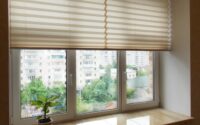


A south-facing living room on a bright afternoon can feel like a greenhouse. The light is lovely, the heat is less so, and the blinds hanging in front of that glass are doing a lot of work. If you are shopping for new window coverings and a sunny window is on the list, one question tends to come up fast: do faux wood blinds warp in heat?
The short answer is that they can, but it depends heavily on how they are made, how wide they are, what kind of glass sits behind them, and how you use them day to day. This guide walks through what faux wood blinds are made of, what actually happens to them in strong sun, and the practical choices that keep slats flat and straight for years. Whether you are in a hot climate or just have one stubbornly bright window, you will come away with a clear checklist.
Why Sun-Facing Windows Are the Toughest Test for Any Blind
Most of us think of window coverings as décor, but on a sunny window they behave more like a thermal layer. Sunlight passes through the glass, hits the slats, and the slats absorb part of that energy and turn it into heat. The space between the glass and the blind can get noticeably warmer than the rest of the room, especially when the blinds are closed tight and there is little air moving.
That pocket of trapped warmth is where most heat-related problems begin. Any material that expands and contracts with temperature will be put through a daily cycle: warm up in the afternoon, cool down at night, repeat. Over many seasons, that cycle can show up as a slight bow, a curl at the slat ends, or a gap that was not there before.
Sun-facing windows also tend to be the ones people cover most often, because glare on a television or a computer screen is a daily nuisance. More hours closed means more hours of heat soaking into the slats, so it is worth choosing the blind with that in mind from the start.
What Faux Wood Blinds Are Actually Made Of
Faux wood blinds are built to look like stained or painted wood without behaving like it. The slats are generally made from a PVC or vinyl-based material, or from a composite that blends polymers with other components. Because they are not made from real timber, they do not soak up moisture the way natural wood can, which is why they are such a popular pick for kitchens and bathrooms.
That same polymer construction is the reason heat matters. Plastics soften a little as they warm, and some formulations soften sooner than others. A well-made slat includes stabilizers and is engineered to hold its shape across a normal range of household temperatures. A bargain slat may be thinner, lighter, and less tolerant of repeated heat.
It helps to remember that “faux wood” is a category, not a single product. Two blinds that look identical on a showroom wall can have different cores, different wall thicknesses, and different finishes. Those differences are what separate a blind that stays crisp for a decade from one that starts to sag after a couple of summers.
So, Do Faux Wood Blinds Warp in Heat?
Yes, faux wood blinds can warp in heat, particularly when a lower-quality product is paired with a very hot, sunny window. The warping usually shows up as a gentle bow along the length of a slat, a wave in a wide blind, or ends that curl slightly upward or downward. It is rarely sudden. It tends to develop gradually after repeated exposure to intense sun.
That said, warping is far from guaranteed. A quality faux wood blind that is sized properly and used sensibly on a sunny window can hold up very well. Many homeowners in hot regions have faux wood blinds on their sunniest windows with no trouble at all. The risk is real but manageable, and most of it comes down to a handful of decisions you control.
The useful way to think about it is as a spectrum. Mild, moderate sun on a well-built blind is low risk. Intense, direct, all-afternoon sun on a thin, wide blind with the slats sealed shut is where problems are most likely to appear.
Slat Quality and Core Construction: Where Most of the Difference Comes From
When people compare faux wood blinds, they often look at color and price first. For sun-facing windows, the construction details deserve more attention. Slat thickness, the density of the core, and the finish all influence how a slat responds to heat.
Some faux wood slats are solid throughout, while others use a foam or hollow core to reduce weight. Lighter slats can be easier on the headrail and lift system, but they may also flex more under heat. Heavier, denser slats generally resist bowing better, though they weigh more and put more demand on the hardware. Neither choice is automatically right, so it is worth asking what a specific product is made of and how it is intended to perform in high-heat rooms.
The finish matters too. Lighter colors reflect more sunlight and absorb less, so a white or cream slat will usually run cooler than a deep espresso one in the same window. If you love a dark stain, that is still a fine choice, but pairing it with good habits and a quality product becomes more important.
Why Wide Blinds and Big Windows Need Extra Thought
The longer a slat is, the more room it has to bow. A blind across a narrow bathroom window has very little span to sag, while a blind across a large picture window or sliding door has a lot. This is why width is one of the most common factors when a faux wood blind starts to curve in the middle.
Manufacturers publish width limits for exactly this reason, and a good consultant will point out when a window is approaching them. For very wide openings, splitting the covering into two or three blinds under a shared headrail or valance, or using a different style altogether, can keep each span shorter and straighter.
Slat size plays a part as well. Wider slats, such as two and a half inch or larger, give a bold, plantation-style look and show off the wood grain, but they carry more surface area and more weight. If you are interested in a larger slat, look for a product designed for it rather than assuming any wide slat will behave the same as a standard one. For readers around North Texas who want to see the options side by side, the local team behind faux wood blinds lewisville tx homeowners can browse offers sample-based consultations at the home, which makes it easier to compare slat sizes and finishes against the actual window.
How Your Glass Changes the Heat Equation
Not all windows send the same amount of heat toward your blinds. Older single-pane glass lets a lot of warmth through. Modern double-pane glass with a low-emissivity coating is designed to reflect part of the heat, and that can be good for your energy bill. It can also mean that some of the heat bounces back into the gap between the glass and the blind, warming the slats from the window side.
This does not mean low-e glass is a problem. It simply means that a blind mounted very close to the glass, with the slats closed, can sit in a warm pocket. Leaving a little breathing room, or keeping the slats slightly open, helps that warm air move instead of building up.
If you are not sure what kind of glass you have, look for a faint tint or a slight color shift when you view a reflection at an angle. A window professional can usually tell you quickly, and it is a useful piece of information to share when you are choosing a covering.
Early Signs of Heat Stress to Watch For
Catching a small change early gives you the chance to adjust how you use the blind before it becomes permanent. The first sign is often a slight bow when you tilt the slats closed. Instead of a clean, flat line of light along the bottom edge, you may see a wavy gap between slats where they no longer meet evenly.
Other early signals include slat ends that appear to lift away from the ladder strings, a faint curve when the blind is fully raised, or a slight change in how the tilt mechanism feels. Check on a cool morning, when the slats have had time to relax, and compare them to a blind on a shaded window in the same house. That comparison makes subtle changes much easier to spot.
Surface changes are worth noticing as well. Fading or a slightly chalky finish on the side facing the glass can suggest that the window is receiving strong UV and heat. It is not an emergency, but it is a good reminder to review the habits in the next section.
Everyday Habits That Keep Slats Flat
The good news is that a few simple routines go a long way. During the hottest part of the day, tilt the slats so they are mostly open toward the ceiling, which lets light bounce upward and allows warm air to move through the blind instead of getting trapped behind a sealed surface. Closing them completely for hours on end in direct sun puts the most stress on the material.
If you are away from home for the day, consider leaving the blinds partially open rather than shut tight, or raising them most of the way so the slats stack compactly and take less direct exposure. A stacked blind has far less surface facing the glass than a fully lowered one.
Ventilation helps too. Cracking a window when the weather allows, running a ceiling fan, or keeping the air conditioning on a sensible schedule all reduce the temperature in that warm pocket. For persistent glare and heat, a layered approach works well: a light-filtering or solar shade on the sunniest window, with blinds as a second layer for privacy and style.
Measuring and Mounting Choices That Matter
Fit affects how a blind handles heat. An inside mount that sits within the window frame looks tidy, but it places the slats closer to the glass. An outside mount sits on the wall or trim, leaving more space between the blind and the window, which can help air circulate. Neither is wrong, but on an especially hot window, the extra clearance of an outside mount can be a quiet advantage.
Accurate measuring is just as important. A blind that is cut too tight can bind against the frame as it expands slightly in warm weather, while one that is too loose lets in light gaps. Custom blinds are made to the exact measurements of each window, which is one reason many homeowners choose them for rooms with demanding conditions.
Hardware deserves a glance too. Sturdy brackets, a solid headrail, and a smooth tilt mechanism all help the slats hang evenly. Uneven support can exaggerate a bow that might otherwise be minor.
How Faux Wood Compares With Other Blind Materials in Heat
Real wood blinds look beautiful and are naturally lightweight, but wood responds to humidity and temperature changes in its own way and can also fade or dry over time in strong sun. Faux wood avoids the moisture sensitivity, which is a real advantage in humid rooms, but brings the polymer heat considerations covered above.
Aluminum blinds are very stable in heat, though they can feel warm to the touch and have a more utilitarian look. Vinyl blinds are another budget-friendly choice, and like faux wood, quality varies, so it helps to look at slat thickness and the manufacturer’s guidance. Fabric-based options such as roller or cellular shades do not warp in the same way at all, and they can be excellent at managing solar heat.
The best material is the one that matches the room. A kitchen with a moderate window and plenty of steam might be perfect for faux wood. A west-facing sunroom might be better served by solar shades, or by a different product altogether.
When Shutters Make Sense for the Sunniest Windows
If you love the look of faux wood blinds but have a window that gets punishing sun, it is worth considering shutters. Shutters are built with a sturdy frame that supports each louver, which helps keep everything flat and aligned, and they add a finished, architectural feel to a room. Materials range from real wood to vinyl and composite, so there is a version for most budgets and climates.
Shutters also give you precise control of light. Tilting the louvers lets you direct glare toward the ceiling while keeping privacy, and the thicker construction adds a layer of insulation at the window. For homeowners in the Denton County area who are weighing the option, a page on plantation shutters highland village tx residents might look up is a handy starting point for seeing the styles and materials that are available locally.
As with blinds, the details matter. Frame construction, louver size, and material all affect how a shutter handles heat, so a side-by-side look at samples in your own light is the most reliable way to decide.
Cleaning and Care That Extend the Life of Your Blinds
Gentle, regular care keeps faux wood looking its best and lets you notice changes early. Dust slats with a microfiber cloth or a soft brush attachment, working in the direction of the slats. For marks, a damp cloth with a little mild soap is usually enough. Skip harsh solvents and abrasive cleaners, which can dull the finish or damage the surface.
Avoid pulling the blind sharply or forcing the tilt when it feels stiff. If a slat is resisting, check for a snag on a string or a bracket before applying pressure. A smooth, even motion keeps the hardware aligned and the slats evenly supported.
Take a moment each season to look along the length of the blind from the side. A quick visual check takes seconds, and it is the easiest way to catch a developing bow before it becomes noticeable from across the room.
Questions to Ask Before You Buy
A short list of questions can save a lot of second-guessing. Ask what the slats are made of and whether the product is designed for high-heat windows. Ask about maximum recommended widths, and whether your window falls inside them. Ask what the warranty covers and whether heat-related changes are addressed in the terms.
It also helps to describe your window honestly: which direction it faces, how many hours of direct sun it receives, what kind of glass you have, and how often the blind will be closed. With that information, a good consultant can steer you toward a product that suits the conditions rather than simply the nearest showroom sample.
If you live in the Denton area, Bumble Bee Blinds of Denton offers a free design consultation where samples come to your home, which lets you see how a finish looks in the exact light that your window gets. Seeing the product in place is often the quickest way to feel confident about a choice.
Choosing With Confidence for Your Brightest Room
Faux wood blinds are a practical, attractive choice for many homes, and a sunny window does not rule them out. The key is to match the product to the conditions: choose well-built slats, respect width limits, consider lighter finishes on very hot windows, and use the blind in a way that lets warm air move.
If a window is especially demanding, layering a solar shade, adding shutters, or choosing a different material can give you the look and comfort you want with less worry. A little planning at the start means flat, even slats and a room that feels good through every season.
Start with an honest look at your sunniest window, gather a few samples, and hold them up in the afternoon light. That small step tells you more than any spec sheet, and it puts you in a strong position to choose blinds that stay beautiful for years.