



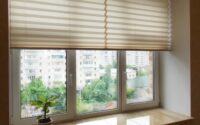


If you’ve ever stood in front of a window treatment aisle (or scrolled through options online) and thought, “Okay… but what does that piece do?” you’re not alone. Blinds and shades look simple at first glance, but they’re made up of small components that each play a specific role in light control, privacy, safety, and day-to-day usability.
This guide breaks down the most common parts of window blinds and shades in plain language. You’ll learn what each component is called, what it does, how it affects performance, and what to watch for when something isn’t working quite right. Whether you’re shopping for new coverings or trying to troubleshoot a stubborn blind, understanding the “anatomy” makes everything easier.
One quick note: the exact parts can vary by type—wood blinds, faux wood blinds, vertical blinds, roller shades, cellular shades, Roman shades, and more all have their own quirks. But the core ideas (lifting, tilting, guiding, stacking, and finishing) show up again and again.
Blinds vs. shades: why the parts aren’t always the same
Before we get into the nuts and bolts, it helps to clarify the difference. Blinds are made of slats (also called louvers) that can tilt open and closed. Shades are made of a continuous piece of fabric or material that raises and lowers, usually without tilting.
This matters because blinds need tilt mechanisms, ladder systems, and slat support. Shades focus more on rollers, tubes, cords (or cordless springs), and fabric control. If you’ve ever tried to fix a shade using blind parts (or vice versa), you know how quickly things stop matching up.
It also affects how you shop. If you want fine-tuned light control without raising the treatment, blinds excel. If you want a cleaner look with a softer feel, shades often win. Many homeowners mix both in the same house depending on the room’s needs.
The headrail: the “control center” at the top
The headrail is the long piece at the top that houses the working components. On horizontal blinds, it’s usually a metal or wood channel where the lift cords, tilt mechanism, and internal drums live. On some shades, the “headrail” might be a cassette or valance that hides the roller tube and brackets.
Functionally, the headrail does two big jobs: it supports the weight of the blind/shade and it protects the moving parts. If the headrail is bent, poorly mounted, or too small for the window, you can get uneven lifting, rubbing, or a treatment that feels “sticky” when you operate it.
If you’re troubleshooting, start here. A surprising number of issues—slats not tilting evenly, cords pulling at an angle, shades drifting—trace back to how the headrail is installed or how its internal pieces are aligned.
Headrail brackets: the hidden heroes
Brackets are the metal (or sometimes heavy-duty plastic) pieces that attach the headrail to the wall, trim, or window frame. They’re designed for either inside-mount (within the window opening) or outside-mount (on the wall/trim above the window).
Brackets matter more than most people think. If they’re not level, the treatment can lift unevenly. If they’re not anchored into solid material, the headrail can sag over time. And if you’re using extension brackets or spacer blocks to clear handles or molding, the wrong spacing can cause the blind to scrape the surface behind it.
When replacing blinds or shades, you can’t always reuse old brackets—even if the headrail looks similar. Manufacturers vary just enough that a “close” bracket fit can create rattling, shifting, or a headrail that pops loose when you pull the cord.
Valance and cassette: the finishing cover up top
A valance is a decorative cover that hides the headrail on many blinds (especially wood and faux wood). A cassette is a more enclosed, streamlined cover common with roller shades and some cellular shades.
Besides aesthetics, these top covers can reduce light gaps and protect internal parts from dust. Cassettes are particularly useful in rooms where you want a clean, built-in look. They also help the shade fabric roll more evenly by shielding it from side drafts and daily bumps.
If your valance keeps falling off, it’s usually a clip issue—not a “bad blind.” Valance clips can wear out, crack, or be installed too far apart. The fix is often a simple replacement rather than a full new treatment.
Slats (louvers): the light-shaping part of blinds
Slats (or louvers) are the horizontal or vertical pieces that overlap to block light and provide privacy. Their angle determines how much light enters and where it lands—on the ceiling, across the floor, or directly into your eyes during late afternoon.
Slat material makes a big difference. Wood looks warm and rich but can be sensitive to humidity. Faux wood is durable and great for kitchens and bathrooms. Aluminum is lightweight and budget-friendly, though it can dent. Vinyl is common in vertical blinds and some budget horizontals.
Slat width also affects the feel of a room. Wider slats (like 2″ faux wood) tend to look more modern and provide a clearer view when open. Narrower slats can feel more traditional and can offer slightly more precise light control.
Bottom rail: weight and stability where you least notice it
The bottom rail is the bar at the bottom of blinds or the weighted edge of many shades. On blinds, it keeps slats aligned and adds just enough weight so the blind hangs straight. On shades, it helps the fabric drop smoothly and creates a crisp edge line.
If your blind looks crooked or “smiles” upward in the middle, the bottom rail can be a clue. Sometimes the rail is bent; other times the lift cords are uneven, causing one side to sit higher. On shades, if the bottom rail is missing or too light, the fabric may flutter with airflow or roll unevenly.
In high-traffic rooms, bottom rails take a beating—especially near patio doors where pets, kids, and daily use bump them constantly. Choosing durable materials (and proper mounting) helps prevent that gradual warping.
Wand and tilt mechanism: how blinds rotate
Many blinds use a tilt wand (a clear or matching rod) that you twist to rotate the slats. Inside the headrail, that wand connects to a tilt mechanism—often a gear or worm drive—that turns a rod running the length of the blind.
The beauty of a wand is control: small turns create small changes in light. If your slats won’t tilt evenly, the issue may be stripped gears, a disconnected tilt rod, or a broken wand hook. These parts are often replaceable, which is good news if the rest of the blind is in great shape.
Some blinds use a tilt cord instead of a wand. You pull one side of the cord to rotate the slats one way, and the other side to rotate them back. Tilt cords can fray over time, especially if they rub on a sharp edge in the headrail.
The ladder system: what holds slats in place
The ladder system is what keeps blind slats supported and evenly spaced. Think of it as two vertical “rails” made of string or fabric tape, connected by horizontal rungs. Each slat rests on a rung, and when you tilt, the ladder shifts to rotate the slats.
There are two common styles: ladder cord (thin strings) and ladder tape (wider fabric strips). Ladder tape can look more decorative and can hide the route holes in slats, reducing light leakage. Ladder cord is more minimal and common on many standard blinds.
If slats are falling out of alignment, or one side droops, the ladder may be stretched, tangled, or broken. This is especially common on older blinds that have been lifted and lowered thousands of times.
Route holes: the small openings that affect light gaps
On many horizontal blinds, you’ll see small holes in each slat where the lift cords pass through—these are called route holes. They’re necessary for the cords to lift the blind, but they also create tiny light leaks when the slats are closed.
Some designs minimize this with “no-hole” or “routeless” slats, or by using ladder tape to cover the holes. If you’re sensitive to light in a bedroom, these details matter more than you’d expect—especially in summer when dawn arrives early.
If you’re comparing products, don’t just look at color and price. Ask how the cords are routed and whether the design is optimized for light control. It’s a small engineering choice that can change your experience every day.
Lift cords, cord locks, and how blinds raise and lower
Traditional blinds use lift cords to raise and lower the slats. The cords run through the slats (via route holes) and up into the headrail, where they wrap around drums. A cord lock grips the cords at the chosen height.
If you’ve ever pulled a cord and felt it “catch,” that’s the cord lock doing its job. When it’s working well, it holds the blind at the exact height you set. When it’s worn, the blind may slowly creep downward or refuse to stay up.
Because cords can pose safety risks for children and pets, many homeowners now choose cordless or motorized options. But corded systems are still common and can be very reliable when maintained and used correctly.
Cord tassels and cord condensers: small parts with a big safety role
The tassel is the little handle at the end of a cord that makes it easier to grip. A cord condenser (sometimes called a cord pull) gathers multiple cords into one pull. These pieces seem purely cosmetic until you use a blind daily—then you realize how much they affect comfort and control.
From a safety standpoint, modern upgrades often include breakaway tassels or tension devices that reduce the risk of loops forming. If you’re updating older blinds, it’s worth checking whether your cords meet current safety recommendations.
If your tassel is missing, you don’t need to replace the whole blind. Many are universal, and replacing them can make the blind feel “new” again—especially if the old cord ends are frayed.
Cord cleats and hold-downs: keeping things tidy and secure
A cord cleat mounts to the wall to wrap excess cord length, keeping it out of reach and preventing tangles. It’s a simple device, but it’s one of the most practical additions for corded blinds.
Hold-down brackets (often used on doors) secure the bottom rail so the blind doesn’t swing when the door opens and closes. If you’ve ever had blinds bang against a door with every breeze, hold-downs are the fix.
These are the kinds of “small add-ons” that make window treatments feel intentional rather than temporary—especially on patio doors, French doors, and frequently used entry doors.
Common shade parts: rollers, tubes, and fabric control
Shades don’t have slats, so their parts revolve around guiding fabric smoothly. Most shades have a top tube or roller, a lifting mechanism (spring, clutch, or motor), and a bottom bar to keep the fabric straight.
When a shade works well, it feels effortless: it lifts evenly, stops where you want it, and rolls without wrinkles. When it doesn’t, the issue is usually tension, alignment, or fabric tracking.
Different shade styles use different hardware, but the “core” is similar across roller shades, solar shades, zebra shades, and even some Roman shades with modern headrails.
Clutch mechanism: the smooth operator for chain-driven shades
A clutch is the mechanism that lets you raise and lower a roller shade using a chain. It controls tension and helps the shade stop at a chosen height without snapping back up.
If a chain shade slips, free-falls, or won’t stay put, the clutch may be worn or the chain may be misrouted. Dust and grime can also make a clutch feel rough over time, especially in kitchens.
Clutches are often replaceable, but it’s important to match the tube size and brand style. A “close enough” clutch can cause the shade to roll unevenly or wear out prematurely.
Spring-loaded rollers: cordless convenience with a learning curve
Many cordless roller shades use a spring inside the tube. You pull the shade down and give a slight tug to release it upward. The spring tension is calibrated so the shade doesn’t slam up or drift down.
If a spring shade snaps upward too fast, it may need tension adjustment. If it won’t retract fully, the spring may be under-tensioned or worn. Temperature can also affect performance slightly, which is why some shades behave differently in a cold cottage versus a warm living room.
For day-to-day use, spring rollers are great for a clean look—no cords, no chains. They’re especially popular in homes aiming for a minimal style.
Cellular (honeycomb) shades: the parts that create insulation
Cellular shades (also called honeycomb shades) are designed with pockets of air—cells—that help insulate the window. Their “parts” are a little different because the fabric structure itself does a lot of the work.
Inside the headrail, you’ll still find lift cords or a cordless mechanism, plus cord guides that keep lift lines evenly spaced. The bottom rail is especially important because it keeps the cells aligned and prevents the shade from twisting.
If you want energy efficiency, cellular shades are often a strong choice. But because their fabric is structured, they can show damage if crushed or bent—so careful handling matters during cleaning and operation.
Day-night (dual) cellular shades: two fabrics, one headrail
Some cellular shades are “day-night,” meaning they combine a light-filtering fabric and a room-darkening fabric in one unit. This adds extra moving parts: two fabric sections, extra attachment points, and sometimes a more complex control system.
The benefit is flexibility. You can keep a soft glow during the day and switch to a darker layer at night without adding a second treatment. The tradeoff is that alignment matters—if one fabric tracks differently, it can look uneven.
When shopping for bedrooms, many people specifically ask for room darkening shades because they help with sleep, glare control, and early morning light. In a dual-shade setup, understanding how the fabrics move (and where they stack) helps you pick a style you’ll actually use daily.
Roman shades: folds, battens, and the structure behind the softness
Roman shades are known for their fabric folds when raised. Underneath that soft look is a system of rings, cords, and sometimes horizontal supports (battens) that create even, attractive stacking.
The back of a Roman shade typically has sewn rings or guides. Lift cords run through these points so the fabric gathers in consistent sections. If one cord is shorter or catches, the shade will raise unevenly and the folds will look lopsided.
Modern Romans can be cordless or motorized, which reduces visible hardware and can make operation smoother, especially on wider windows.
Rings and lift cords: why symmetry depends on tiny details
The spacing of rings and the routing of lift cords determine how cleanly a Roman shade stacks. If rings are uneven, the folds won’t line up. If cords are routed with too much friction, you’ll feel resistance when lifting.
Over time, cords can wear where they rub against rings. If you notice fraying, it’s worth addressing early—cord replacement is usually simpler than repairing torn fabric caused by a sudden failure.
Because Romans are fabric-forward, they pair nicely with other decorative elements like side panels or hardware. If you’re building a layered look, it helps to plan how each piece will operate so nothing interferes with the other.
Vertical blinds and panel tracks: parts built for wide openings
For sliding doors and big picture windows, you’ll often see vertical blinds or panel track shades. Their parts are designed around sideways movement: a headrail with carriers, vanes or panels that hang vertically, and a wand or cord system to traverse (slide) them open and closed.
Instead of lift cords, these systems rely on carriers that glide along a track. If the track gets dirty or bent, the whole system feels rough. If a carrier breaks, one vane may hang oddly or refuse to rotate.
Vertical systems can be surprisingly practical: they’re easy to open for traffic, they handle wide spans well, and they’re often cost-effective for large doors.
Carriers and stems: the pieces that let vanes rotate
Carriers are the sliding components inside the headrail. Each vane attaches to a carrier via a stem or clip. When you rotate the wand, a tilt mechanism turns the stems so the vanes pivot together.
If a vane won’t rotate, it may be disconnected from its stem. If it falls off repeatedly, the vane’s top hole may be torn or the clip may be worn. These are usually replaceable parts, which is good—because you rarely need a full new headrail for a single broken carrier.
For homes with pets, sturdier vane materials and secure attachments matter. A playful cat can do a number on a vertical blind if the vanes are thin and the clips are brittle.
Mounting styles and trim pieces: how installation affects performance
Even the best-designed blind or shade won’t feel right if it’s mounted poorly. Inside-mount installations look clean and built-in, but they require enough depth and square window frames. Outside-mount installations can cover imperfect trim, reduce light gaps, and make windows appear larger.
Trim pieces like returns (the side pieces on a valance), side channels (for some blackout shades), and light blockers can dramatically change results. If you’ve ever wondered why two “similar” shades perform differently, it might come down to these details.
When you’re planning a whole-home update, it can be helpful to talk through these choices with someone who’s seen lots of real windows (not just perfect showroom openings). If you’re comparing options with a tailored window coverings company Michigan, for example, you can ask specifically about mount depth, light gaps, and whether a cassette or side channel makes sense for your rooms.
Inside mount: sleek look, but measurements must be spot-on
With an inside mount, the treatment sits within the window frame. That means the headrail width must be precise, and the window opening should be measured at multiple points (top, middle, bottom) because many frames aren’t perfectly square.
If the opening narrows slightly at one end, the headrail can rub when you install it, leading to squeaks or difficulty snapping it into the brackets. Too small, and you’ll see larger side gaps than expected.
Inside-mount is often the go-to for a modern look, especially with roller shades and cellular shades. Just remember: the cleaner the look, the more noticeable small measurement errors become.
Outside mount: better coverage and more flexibility
Outside-mount treatments sit on the wall or trim above the window. This can be a lifesaver for shallow frames, windows with obstructions, or when you want to hide uneven trim.
Outside mount can also improve darkness and privacy because it allows the fabric or slats to overlap the window opening more. If you’re trying to reduce early morning light in a bedroom, this mounting style often helps more than people expect.
Design-wise, outside mount can make a small window feel larger by extending the treatment beyond the frame. It’s a classic trick in living rooms and dining rooms where you want a more dramatic, intentional look.
Control options: cords, cordless, motorized, and what parts change
The way you operate your blinds or shades changes the internal parts significantly. Corded systems use cord locks and lift cords. Cordless systems use springs, tensioners, or internal lift mechanisms. Motorized systems use a motor, power source, and controls like remotes or smart home integration.
Choosing a control type isn’t just about convenience—it affects durability and maintenance too. A corded blind might be easy to repair with simple replacement parts. A motorized shade may need fewer daily “tugs,” which can reduce wear, but repairs may be more specialized.
In homes with kids and pets, cordless and motorized options are popular for safety and simplicity. If you’re already investing in new window treatments, it’s worth comparing the long-term experience, not just the upfront cost.
Motorized shades: what’s inside the tube
Motorized roller shades typically have a tubular motor inside the roller tube. Depending on the model, it may be battery-powered, plug-in, or hardwired. The motor includes limit settings so the shade stops at the right top and bottom positions.
If a motorized shade stops short or rolls too far, it may need its limits reset. If it struggles to lift, the shade could be oversized for the motor strength, or the fabric may be rubbing due to bracket misalignment.
Motorization shines in hard-to-reach windows, tall stairwells, and wide spans where manual operation feels cumbersome. It also makes it easier to manage daylight consistently throughout the day.
Decorative hardware and “extras” that change how the whole setup feels
Not every important part is mechanical. Decorative elements like curtain rods, rings, holdbacks, and layering pieces can change how your window treatments function and how the room feels.
For example, pairing a simple roller shade with side panels can soften a room and improve acoustics. Adding a valance can make a basic blind look more custom. Even the finish of a rod (matte black, brushed nickel, warm brass) can tie together lighting fixtures and furniture.
If you’re exploring interior window accessories, it helps to think in layers: what controls light (shade/blind), what adds softness (drapery), and what provides structure (hardware). When these pieces coordinate, the whole window looks intentional rather than pieced together.
Drapery rings, headers, and how curtains actually move
Curtains and drapes have their own set of “parts,” and they’re worth understanding if you plan to layer. The header (the top of the curtain) can be grommet, pinch pleat, ripplefold, rod pocket, and more. Each header style changes how the fabric stacks and glides.
Rings and gliders determine how smoothly the curtain opens and closes. If you’ve ever fought with a sticky curtain, it’s often because the rings are too small for the rod, the rod finish is tacky, or the spacing is off.
Layering curtains over a shade can also help with light gaps on the sides, especially in bedrooms. It’s not just decorative—it can be functional, too.
Troubleshooting by part: quick clues when something feels “off”
When blinds or shades misbehave, the symptoms usually point to a specific part. A blind that won’t stay up points to the cord lock. A shade that rolls crooked points to bracket alignment or fabric tracking. Slats that tilt unevenly point to the ladder system or tilt mechanism.
It’s tempting to assume the whole treatment is “broken,” but many issues are isolated to one replaceable component. Knowing the part names helps you describe the problem accurately—whether you’re calling for help, searching for replacement parts, or reading manufacturer guides.
Here are a few common scenarios and what they often mean.
If the blind raises unevenly
Uneven lifting usually means one lift cord has more tension than the other, or the cords are not routed evenly through the cord lock/drums. Sometimes a cord is caught on a bracket edge inside the headrail.
Another possibility is that the blind is not level in its brackets, which makes it “want” to lift more on one side. This is especially common if the mounting surface is slightly uneven or if one bracket is mounted a fraction higher.
If the blind is older, the ladder cords may also be stretched more on one side, causing slats to stack unevenly when raised.
If the shade won’t roll straight
A shade that telescopes (rolls toward one side) is often dealing with bracket misalignment. Even a small difference in bracket level can cause the fabric to track to one side as it rolls.
Fabric itself can also be the cause—humidity, heat, and manufacturing tolerances can influence how fabric behaves. Some roller shades include a small adjustment (like adding a shim or a piece of tape on the roller) to correct tracking.
If the shade rubs a side bracket or cassette, it can create fraying over time. Fixing alignment early prevents permanent fabric damage.
If slats won’t tilt or feel gritty
Gritty tilting often points to dust buildup inside the headrail or a worn tilt gear. In kitchens, airborne grease can mix with dust and create sticky residue that makes mechanisms feel rough.
If the wand spins freely without moving slats, the wand hook may be disconnected or the internal gear stripped. If only part of the blind tilts, the tilt rod may be damaged or not engaging across the full width.
These are typically repairable issues, especially if the blind is otherwise in good condition.
Choosing parts that match your lifestyle (not just your window)
Understanding parts is helpful for repairs, but it’s even more powerful when you’re choosing new treatments. The “right” blind or shade isn’t only about color—it’s about how the components will hold up in your specific room.
For example: bathrooms need moisture-friendly materials and mechanisms that won’t corrode. Bedrooms often benefit from better light control (cassette, outside mount, dual fabrics). Living rooms might prioritize view-through and glare reduction. Doors need hold-downs or alternative designs that won’t swing.
When you match the parts to the room, you get a setup that feels easy and dependable, not fussy.
Kitchens, bathrooms, and humid spaces
In humid rooms, avoid materials that warp easily. Faux wood blinds, vinyl, aluminum, and many synthetic shade fabrics tend to perform well. Hardware quality matters too—rust-resistant components and sturdy brackets reduce long-term issues.
Also consider cleanability. Smooth slats wipe down faster than textured ones. Roller shades can be easy to maintain, but be mindful of fabric type if you expect splashes or cooking residue.
If you love the look of fabric in a kitchen, choosing a wipeable or treated fabric can keep it looking fresh without constant deep cleaning.
Bedrooms and media rooms
For sleep and screen time, light control is king. Parts that help include cassettes, side channels, outside mounts, and fabrics designed for room darkening. Even the placement of route holes in blinds can matter if you’re sensitive to light.
Noise and temperature also come into play. Cellular shades can help with insulation and soften outside sound slightly. Layering drapery over shades can further improve darkness and add a cozy feel.
If you’re a shift worker or have kids who nap during the day, these details aren’t “nice to have”—they’re quality-of-life upgrades.
Living rooms and street-facing windows
In public-facing rooms, you may want privacy without feeling closed in. Top-down/bottom-up shades are great for this because you can let light in from the top while keeping the lower portion covered.
Blinds with wider slats can provide a more open view when tilted, while still controlling glare. Solar shades are another option if you want daytime privacy and UV reduction while preserving some view.
For a polished look, consider how the headrail is finished—valance, cassette, or exposed hardware. That top edge is often what makes a window treatment feel custom.
A quick glossary of key parts (so you can name what you’re seeing)
If you like having the vocabulary handy, here’s a quick list of common parts you’ll hear in showrooms and install guides. Knowing these terms makes it much easier to compare products and explain problems.
Headrail: top housing that holds working components.
Bracket: mounting hardware that supports the headrail.
Valance/cassette: decorative or protective top cover.
Slats/louvers: individual pieces that tilt to control light (blinds).
Bottom rail: weighted bottom bar for stability.
Ladder cord/tape: system that supports slats and enables tilt.
Route holes: holes in slats for lift cord passage.
Lift cords: cords that raise/lower blinds.
Cord lock: mechanism that holds cords at a set height.
Tilt wand/tilt mechanism: parts that rotate slats.
Clutch: chain-driven roller shade mechanism.
Roller tube: tube the shade fabric wraps around.
Carrier: sliding component for vertical blinds/panel tracks.
Once you can label the parts, the whole category becomes less mysterious—and you’ll feel a lot more confident choosing, maintaining, or upgrading what’s on your windows.
