




Water has a sneaky way of turning a “small issue” into a full-blown home disaster. A little leak under the sink, a dishwasher overflow, a wet carpet after a storm—none of it seems like an emergency in the moment. But when water sits, it doesn’t just stay put. It spreads, soaks, wicks upward, seeps into cracks, and quietly starts changing the materials around it.
If you’re dealing with water damage (or suspect you might be), the single biggest factor that determines how bad it gets is time. Drying quickly isn’t just about comfort or avoiding a musty smell. It’s about preventing structural deterioration, mold growth, electrical hazards, and expensive, cascading repairs that can take weeks to unwind.
This guide breaks down what really happens when water isn’t dried fast enough: the timeline of damage, the hidden places moisture lingers, the health risks, the insurance complications, and the practical steps that actually help. You’ll also get a clear idea of when DIY drying is fine and when it’s time to bring in professional equipment and expertise.
Water doesn’t wait: why the first day matters so much
When water hits building materials, it immediately starts moving. Gravity pulls it down, but capillary action pulls it sideways and upward through porous materials like drywall, wood, grout lines, and carpet padding. That’s why a spill in one corner can end up affecting a much larger area than you’d expect.
The first 24 hours are the sweet spot for limiting damage. During this window, many materials can still be dried back to normal moisture levels before they swell, warp, delaminate, or become a breeding ground for microbial growth. After that, the odds of permanent damage go up fast.
It’s also important to know that “looks dry” and “is dry” are not the same thing. Surfaces can feel dry while moisture remains trapped inside wall cavities, under flooring, or within insulation. That hidden moisture is where the worst long-term problems start.
A real-world timeline: what changes as hours turn into days
In the first few hours: absorption and spread
Right after a leak or flood, porous materials begin absorbing water like a sponge. Carpet and padding soak first, then drywall at the base of walls, baseboards, and any wood trim. If the water source continues (even slowly), moisture keeps migrating outward.
During these early hours, your best move is stopping the source, extracting standing water, and increasing airflow. If you can remove wet rugs, lift cushions, and get fans running, you may prevent the water from reaching deeper layers.
But if water has already entered wall cavities or traveled under flooring, you’ll need more than a box fan. That’s where professional moisture mapping (using meters and thermal imaging) becomes valuable—because you can’t fix what you can’t see.
After 24–48 hours: swelling, staining, and microbial activity
Once you pass the first day, materials begin changing shape. Wood can swell and start to cup. Drywall can soften, crumble at the edges, and lose structural integrity. Cabinetry may begin to warp, and adhesives under flooring can weaken.
This is also when odors start to show up. That “wet dog” smell isn’t just unpleasant—it’s a sign that moisture is lingering in areas with limited airflow. If the water was contaminated (like a backup, toilet overflow, or outdoor flooding), the risk level rises even faster.
Microbial growth can begin within this window, especially in warm, humid conditions. Even if you don’t see mold yet, spores can start colonizing damp paper backing on drywall, under carpet, or in insulation.
After 3–7 days: mold, decay, and bigger demolition
By day three, mold growth is often visible in at least some areas, especially if the environment is humid and the wet materials haven’t been dried aggressively. At this stage, drying alone may not be enough—you may be looking at removal of affected materials, cleaning, and containment procedures.
Wood framing and subfloors can start to degrade, particularly if the water is trapped and oxygen is available. Metal fasteners may corrode. Paint can bubble. Flooring can separate. The longer moisture remains, the more likely it is that repairs will involve demolition rather than restoration.
Even worse, the damage can become “disconnected” from the original leak. You might fix the plumbing and think you’re done, only to discover weeks later that a wall is soft, a floor is buckling, or an odor won’t go away.
What water does to common building materials
Drywall and insulation: the hidden sponge effect
Drywall is one of the first materials to show damage, but it’s also one of the easiest to underestimate. The surface may dry, but the gypsum core can hold moisture longer than you think. If the paper facing stays damp, it becomes a prime food source for mold.
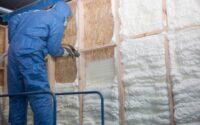
Insulation is even trickier. Fiberglass insulation can hold water and lose its insulating value, while cellulose can clump and stay wet for a long time. Wet insulation inside a wall cavity can keep studs damp, slow drying dramatically, and create the perfect conditions for microbial growth.
When water has soaked into walls, pros often remove baseboards and, in some cases, cut small access openings to dry cavities properly. It sounds invasive, but it can prevent much larger tear-outs later.
Wood framing and trim: swelling, warping, and long-term weakening
Wood is resilient, but it’s not immune. When it absorbs moisture, it expands. As it dries unevenly, it can twist, warp, or crack. Trim and baseboards may pull away from walls, and door frames can shift enough that doors start sticking.
If moisture remains elevated for too long, wood can begin to decay. Rot isn’t immediate, but persistent dampness sets the stage. The scary part is that framing can look fine while slowly losing strength, especially in areas with limited ventilation.
Proper drying aims to bring wood back to a safe moisture content relative to the surrounding environment. That’s why restoration teams monitor moisture levels over time rather than relying on a single “it seems dry now” check.
Flooring: what happens under your feet
Flooring problems often show up late, and they’re expensive. Hardwood can cup (edges rise), crown (center rises), or buckle. Laminate can swell at seams and delaminate. Vinyl may loosen if adhesives fail. Tile can stay intact while moisture wreaks havoc below, especially if the subfloor is wood.
Carpet is a special case. The carpet fibers may dry, but the padding underneath can remain wet and sour. If the water was clean and addressed quickly, carpet can sometimes be saved. If it was contaminated or sat too long, replacement is often the safest option.
Subfloors are where the real trouble can hide. Water trapped between flooring and subfloor can linger for days, and without the right airflow (like drying mats or specialized systems), it may never fully dry—leading to odors, mold, and deterioration.
Air quality and health: why “musty” is a warning sign
Mold and bacteria: not just a cosmetic issue
Mold is the headline risk, but it’s not the only one. Depending on the source of the water, bacteria and other pathogens can be present. Even “clean” water can become contaminated once it flows through building materials and picks up debris.
People with asthma, allergies, or compromised immune systems are especially vulnerable to poor indoor air quality after water damage. Symptoms can range from congestion and coughing to headaches and skin irritation. If you notice these issues after a water event, it’s a strong sign moisture is still present somewhere.
And yes—mold can grow in places you don’t see. Behind baseboards, inside wall cavities, under cabinets, and beneath floors are common hotspots. That’s why professional drying focuses on the entire affected system, not just the visible wet area.
Odors that won’t leave: what they usually mean
A persistent musty smell is often caused by microbial volatile organic compounds (MVOCs), which are gases released by mold and bacteria as they grow. Air fresheners might mask it, but they won’t solve the problem.
Sometimes odors come from wet porous materials that are slowly breaking down—like damp carpet pad or swollen particleboard. These materials can hold moisture deep inside, even when the surface feels normal.
If you’ve been running fans for days and the smell is still there, it’s time to reassess. You may need targeted dehumidification, moisture readings, and possibly removal of materials that can’t be dried safely.
Electrical and fire risks: the part people forget to take seriously
Water and electricity are a dangerous mix, and the risk isn’t limited to obvious flooding. A slow leak can drip into outlets, light fixtures, junction boxes, or appliance wiring. Sometimes the first sign is a tripped breaker—other times there’s no warning at all.
Corrosion can also develop over time. Even if everything “works” immediately after the water event, moisture can degrade connections and create resistance, which increases heat and fire risk later. This is one reason professionals often recommend having an electrician inspect affected areas when water reached wiring or panels.
If you suspect water has contacted electrical systems, prioritize safety: shut off power to the affected area and avoid touching outlets or appliances until they’ve been checked. Drying is important, but not at the expense of personal safety.
Insurance and documentation: delays can cost more than repairs
Many homeowners are surprised to learn that insurance claims can get complicated when drying is delayed. Insurers typically expect you to mitigate damage—meaning you should take reasonable steps to prevent the problem from getting worse. If water sits for days and mold develops, some policies may limit coverage for the resulting mold remediation.
Documentation helps a lot. Photos and videos of the source, the affected areas, and the drying/cleanup steps can support your claim. Keep receipts for equipment rentals, professional services, and any emergency repairs. If you hire a restoration team, their moisture readings and drying logs can be valuable evidence that the work was necessary and properly performed.
It’s also worth noting that the category of water matters. Clean water from a supply line is treated differently than gray water from appliances or black water from sewage backups. The more contaminated the water, the more urgent it is to act quickly and safely.
DIY drying vs. professional drying: how to tell the difference
When a DIY approach can be enough
If the water event is small, recent, and truly clean—like a minor spill on tile or a small leak caught immediately—DIY drying may be fine. The key is fast action: stop the source, extract water, increase airflow, and run a dehumidifier if you have one.
Focus on what’s underneath. Pull up area rugs. Check under furniture. If water reached carpet, lift a corner and feel the padding. If it’s wet, surface drying alone won’t cut it.
DIY works best when you can fully access the wet materials and confirm they’re drying properly. If you can’t access the affected layers, you’re guessing—and guessing is where small problems become expensive surprises.
When it’s time to call in restoration pros
If water has entered walls, ceilings, or floors—or if you’re dealing with more than a couple of square feet—professional help is usually the smarter move. Pros bring commercial-grade extraction, dehumidification, and air movement equipment designed to dry structures quickly and evenly.
They also bring measurement tools. Moisture meters, hygrometers, and thermal cameras help locate hidden moisture and track progress. That data-driven approach is what prevents “dry on the outside, wet on the inside” situations.
When you’re comparing options in Northern Virginia, a team experienced in property restoration Sterling Virginia services can be especially helpful because they’re used to handling everything from emergency water extraction to drying, cleanup, and coordination with insurance workflows.
Why drying is more than fans: the science of proper moisture removal
Airflow, temperature, and humidity work together
Effective drying depends on creating the right conditions for evaporation and removal. Air movers increase airflow across wet surfaces, which speeds evaporation. Dehumidifiers pull moisture out of the air so evaporation can continue instead of stalling once the air becomes saturated.
Temperature matters too. Warmer air can hold more moisture, which can accelerate drying when managed correctly. But simply “heating the house” without dehumidification can backfire by increasing humidity and encouraging microbial growth.
Professionals set up drying systems based on psychrometrics (the relationship between air, moisture, and temperature). It sounds technical, but the takeaway is simple: proper drying is controlled, monitored, and adjusted—not just “set some fans and hope.”
Moisture mapping: finding what your eyes can’t
One of the biggest benefits of professional restoration is moisture mapping. Water rarely stays in neat boundaries. It travels along framing, under baseboards, behind cabinets, and through tiny openings around pipes.
Moisture meters can detect elevated moisture in drywall, wood, and flooring. Thermal imaging can reveal temperature differences that often correlate with damp areas (though it’s not a moisture meter by itself). Together, these tools help identify the true extent of the affected area.
This matters because incomplete drying is a common reason people experience recurring odors, repeated mold issues, or delayed structural problems. Drying the visible spot is only half the job.
Different water sources, different levels of urgency
Clean water events: still urgent, but more salvageable
Clean water comes from sources like supply lines, rainwater that hasn’t contacted contaminants, or a tub overflow (depending on what it contacts afterward). These situations can sometimes be handled with less demolition if addressed immediately.
Even so, clean water doesn’t stay clean. The moment it soaks into carpet, drywall, or insulation, it can pick up dirt, organic matter, and bacteria. That’s why speed is still critical.
With quick extraction and proper drying, you may be able to save flooring, baseboards, and drywall sections that would otherwise need replacement.
Gray and black water: treat it as a safety issue
Gray water may include dishwasher discharge, washing machine overflow, or water that has passed through building materials. Black water includes sewage backups and floodwater that may contain pathogens. These categories require extra precautions: protective gear, containment, disinfection, and often removal of porous materials that can’t be sanitized reliably.
Trying to “dry it out” without addressing contamination can leave harmful residues behind. It can also spread contaminants through HVAC systems or foot traffic. Safety and sanitation become the priority alongside drying.
If you’re unsure what category your water damage falls into, assume it’s more serious until proven otherwise—especially if there’s any sign of backup, odor, or discoloration.
What professional restoration may look like in practice
Emergency steps: stop, extract, stabilize
Most restoration jobs start with stopping the source (or confirming it’s stopped), then extracting standing water with pumps or high-powered vacuums. The goal is to remove as much liquid water as possible before focusing on evaporation.
Next comes stabilization: setting up air movers and dehumidifiers, and sometimes removing baseboards or drilling small holes to dry wall cavities. In some cases, crews may apply antimicrobial treatments to reduce the risk of microbial growth.
In areas like Ashburn, where homes often have finished basements and layered flooring systems, speed and thoroughness matter. Working with an Ashburn VA restoration company can help ensure the drying plan matches the construction style and the way moisture tends to travel in those assemblies.
Monitoring and verification: the part that prevents repeat problems
Drying is not a one-and-done setup. Conditions change as materials release moisture. A good restoration process involves monitoring humidity and moisture content daily (or regularly) and adjusting equipment placement and settings to keep drying moving in the right direction.
Verification is what separates “we ran fans” from “the structure is dry.” Moisture readings should return to normal levels compared to unaffected areas. Without that baseline comparison, it’s hard to know if you’ve truly reached a safe, stable state.
This is also the stage where decisions about repairs become clearer—what can be saved, what needs replacement, and what should be cleaned or treated further.
How water damage can quietly impact home value and future renovations
Even if you manage to dry things “well enough” to live comfortably, unresolved water damage can show up later during a home sale or renovation. Home inspectors may flag staining, elevated moisture readings, or signs of past microbial growth. Buyers may request remediation or negotiate the price down.
Renovations can uncover hidden damage too. A bathroom remodel might reveal rotted subfloor around a toilet flange. A kitchen upgrade might expose swollen particleboard under cabinets. When water damage is handled quickly and documented properly, you’re far less likely to face unpleasant surprises later.
It’s also worth considering that repeated small leaks can be worse than one obvious event. Slow moisture over time can lead to chronic mold issues and more extensive structural deterioration because it’s easy to ignore until it’s widespread.
Practical steps you can take right now if you have water damage
First actions that make a big difference
Start by stopping the water source if it’s safe to do so. Shut off the appropriate valve, or if you can’t identify it quickly, shut off the main water supply. If there’s any risk of water near electrical outlets or appliances, shut off power to the area.
Next, remove standing water. Towels help for small areas, but a wet/dry vacuum is better if you have one. The faster you extract, the less water is available to soak deeper into materials.
Then increase airflow and reduce humidity. Open windows if outdoor humidity is low; otherwise, keep the home closed and run dehumidifiers. Move furniture off wet carpet and place foil or plastic under furniture legs to prevent staining and dye transfer.
What to avoid (even if it seems logical)
Don’t assume that cranking the heat alone will solve the issue. Without dehumidification, you can end up with warm, humid air that slows drying and encourages microbial growth.
Don’t paint over stains or “seal in” odors as a first step. If moisture remains inside the wall or ceiling, sealing can trap it and make the problem worse. Stains and odors are signals—treat the cause, not the symptom.
And don’t ignore wet padding, insulation, or subflooring. Those layers are where water lingers longest, and they’re often the reason people deal with recurring smells and mold weeks after the initial event.
Why certain areas need extra attention: basements, crawlspaces, and bathrooms
Basements: slow drying and high humidity
Basements tend to dry slowly because they’re cooler, have less airflow, and often have higher ambient humidity. Finished basements add complexity with carpeting, drywall, and insulation that can hide moisture.
If water damage happens in a basement, it’s common for moisture to spread under flooring and behind baseboards. Dehumidification becomes especially important here, and in many cases, professional extraction and drying equipment can prevent long-term odor and mold problems.
Also keep an eye on stored items. Cardboard boxes, fabric, and paper products can absorb moisture quickly and become moldy even if the room itself seems “mostly fine.”
Bathrooms and kitchens: repeated moisture and tricky materials
Bathrooms and kitchens deal with water every day, so small leaks are easy to dismiss. But repeated moisture around sinks, toilets, tubs, and dishwashers can slowly damage subfloors, cabinets, and wall cavities.
Tile and grout aren’t waterproof the way many people assume. Water can seep through grout lines and around fixtures, especially if caulking fails. Over time, that moisture can soften drywall, degrade adhesives, and create mold behind walls.
If you’re seeing recurring caulk failure, loose tiles, or soft spots near fixtures, it’s worth investigating sooner rather than later. Those are often early signs that moisture has been present longer than you think.
When specialized local expertise matters
Water restoration isn’t one-size-fits-all. The right approach depends on the type of water, the materials affected, how the home is built, and even local climate patterns that influence drying conditions. In communities with a mix of newer builds and older homes, knowing how different assemblies behave can save time and prevent unnecessary demolition.
For example, some neighborhoods have homes with complex floor layers, engineered wood, or finished lower levels where moisture can get trapped. In those cases, having a team that’s familiar with targeted drying methods—like drying mats for hardwood or controlled cavity drying—can make a noticeable difference in outcomes.
If you’re looking for a top choice for water restoration in Arcola, it’s smart to ask specific questions: How do you verify dryness? Do you use moisture mapping? Will you provide drying logs? Those details tell you whether the job will be handled thoroughly or just cosmetically.
Long-term prevention habits that reduce the odds of a repeat event
Once you’ve been through water damage once, you tend to notice how many small risks are hiding in plain sight. A few simple habits can prevent the next issue—or at least help you catch it early enough to avoid major repairs.
Check under sinks and behind toilets periodically, especially in rarely used bathrooms. Look for tiny drips, corrosion on shutoff valves, or warped cabinet bottoms. Replace washing machine hoses proactively (braided hoses are a good upgrade), and consider a drain pan under the washer if it’s on an upper floor.
Smart leak detectors are also surprisingly effective. Placing sensors near water heaters, sump pumps, dishwashers, and under-sink plumbing can give you an early alert before a slow leak becomes a saturated floor and moldy wall cavity.
Drying fast is cheaper, healthier, and less stressful
Water damage doesn’t always look dramatic at first, which is exactly why it catches people off guard. The real trouble starts when moisture lingers in hidden layers—under floors, inside walls, and in insulation—where it can quietly trigger mold growth, structural changes, and lingering odors.
The good news is that quick action really does change the outcome. Stopping the source, extracting water, and creating the right drying conditions in the first day can mean the difference between a manageable cleanup and a major restoration project.
If you’re ever unsure whether your home is truly dry, it’s worth getting help that includes moisture measurement and verification. Peace of mind is great—but measured dryness is even better.
